
What Actually Happens to Your Body When You Do Pilates
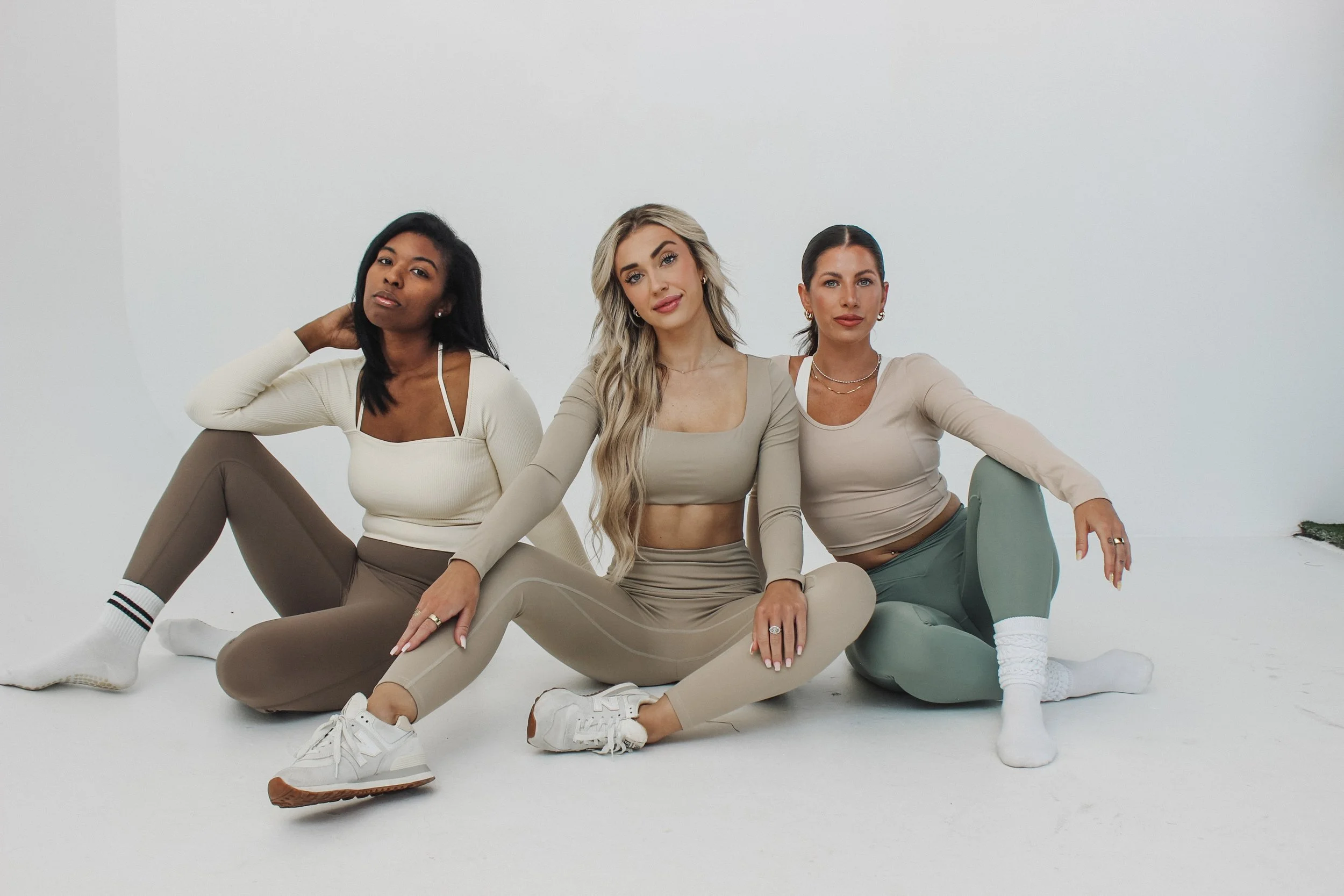
Culture Pilates members in Dade City, FL. Reformer and mat Pilates classes for all levels serving Wesley Chapel, Zephyrhills, and Pasco County.
The science behind why it works even when it doesn't feel like it.
For a long time, Pilates had a reputation problem.
It got lumped in with stretching. With recovery days. With things you do when you're not really working out. And honestly, that reputation made sense from the outside. No one's leaving a Pilates class looking like they just survived something. There's no puddle of sweat on the mat. No one's gasping.
So what explains the fact that people who try it can't seem to stop?
What Pilates actually does to your body
Pilates doesn't go after the muscles you already know about. It goes after the ones your body has been quietly ignoring for years. The deep stabilizing muscles around your spine, your hips, your pelvis. The ones that are supposed to hold everything in place but stopped doing their job somewhere between long hours at a desk, an old injury you worked around, and years of moving the same way without anyone correcting it.
You don't feel it during class the way you'd expect. You feel it two days later, in places you forgot you had. And then something slower starts to happen. Your posture changes. You carry yourself differently. The chronic lower back pain that used to nag you every morning just doesn't anymore.
A 2024 systematic review published in BMC Sports Science, Medicine and Rehabilitation found that consistent Pilates practice measurably improves spinal alignment and reduces chronic lower back pain, in some cases decreasing dependence on pain medication entirely. Separate research published in Complementary Therapies in Medicine found significant reductions in anxiety and fatigue in regular Pilates practitioners. Not people doing it occasionally. Regularly.
Joseph Pilates called his method Contrology. Not a workout. A coordination system built around the idea that the body and mind had to work together for either one to function well. "A few well-designed movements, properly performed in a balanced sequence," he wrote in Return to Life Through Contrology, "are worth hours of doing sloppy calisthenics." A hundred years later, the peer-reviewed research keeps proving him right.
Pilates for chronic conditions and autoimmune disease
Not everyone comes to Pilates looking for a workout. Some people come because their doctor told them to.
Erica Shireman spent years in the gym. Hours and hours lifting heavy, trying to find her rhythm, doing what she thought she was supposed to do to stay in shape. Then her trainer suggested Pilates. Not as a trend. As a medical recommendation. Erica has Hashimoto's disease, an autoimmune condition where the body attacks its own thyroid, and her trainer believed Pilates could help manage it in a way that traditional gym work couldn't.
She was skeptical. She walked into her first reformer class nervous. The machine looked intimidating. She wasn't sure how it was going to play out.
She stuck with it anyway.
Within the first few months, she dropped weight. She started seeing muscle definition she hadn't seen from years of lifting. She felt stronger without feeling beat up. And something shifted that she wasn't expecting: she stopped needing to destroy herself in a workout to believe it was working. The soreness leveled out. The results didn't.
Erica is a grandmother now. She's not chasing a number on a scale or trying to look a certain way. She wants to be able to play with her grandkids. She wants balance, flexibility, and the kind of functional strength that actually translates to real life. Pilates gave her that.
She's been a member since opening week. She hasn't stopped.
The mental health benefits of Pilates
Not everyone walks into a Pilates studio looking for a physical transformation. Some people walk in because everything else in their life is in the middle of falling apart and they need one thing that holds.
One of our members came to the studio during the hardest year of her life. She was going through a divorce. She had been through bariatric surgery and gallbladder removal. She was living alone for the first time ever. Everything felt heavy. Starting over felt impossible. Walking into a Pilates class for the first time felt intimidating. Continuing to show up felt even harder.
But she kept going. And what Pilates gave her wasn't just core strength or muscle tone. It gave her mental clarity. Internal peace. A room full of strangers that somehow became community. She said that for the first time, she was learning to love and appreciate her body for what it could do instead of punishing it for what it wasn't. She found joy in a season where joy felt like the last thing that was coming.
That's not something a treadmill gives you. That's not something a calorie tracker measures. And it's the kind of result that doesn't show up in a before and after photo but changes the entire way someone moves through the world.
Is Pilates actually a good workout?
You probably won't walk out of class looking like you just ran five miles. But the muscles being recruited in Pilates are the ones most traditional workouts skip entirely. The deep core stabilizers around your spine and pelvis are nearly impossible to access through high-impact or heavy weight-bearing exercise. Pilates targets them directly through controlled, deliberate movement on a reformer or mat.
More practically, Pilates doesn't take a toll the way higher-impact training does. There's no recovery debt. You can go multiple times a week without your body breaking down, which means you're actually more consistent. And consistency is the only thing that produces lasting results in any fitness practice.
Who is Pilates for?
The people who walk through our doors come from everywhere. Women rebuilding their lives from scratch. Grandmothers who want to keep up with their grandkids. Athletes who are tired of feeling lopsided from years of one-sided training. People managing autoimmune conditions or chronic pain who need something their body can sustain. Complete beginners who have never set foot in a fitness studio and just want to feel good again. What they have in common is that they all expected less than what they got.
Pilates works for all fitness levels, all ages, and all body types. Whether you're recovering from surgery, sitting at a desk eight hours a day, or training for a marathon, the method meets you exactly where you are and starts building from there.
Turns out the workout you wrote off might be the one your body has been waiting for
We’re located in Dade City and serve clients from Wesley Chapel, Zephyrhills, Land O’ Lakes, Brooksville, and Spring Hill.