
Mat Pilates vs Reformer Pilates: What's Actually the Difference?
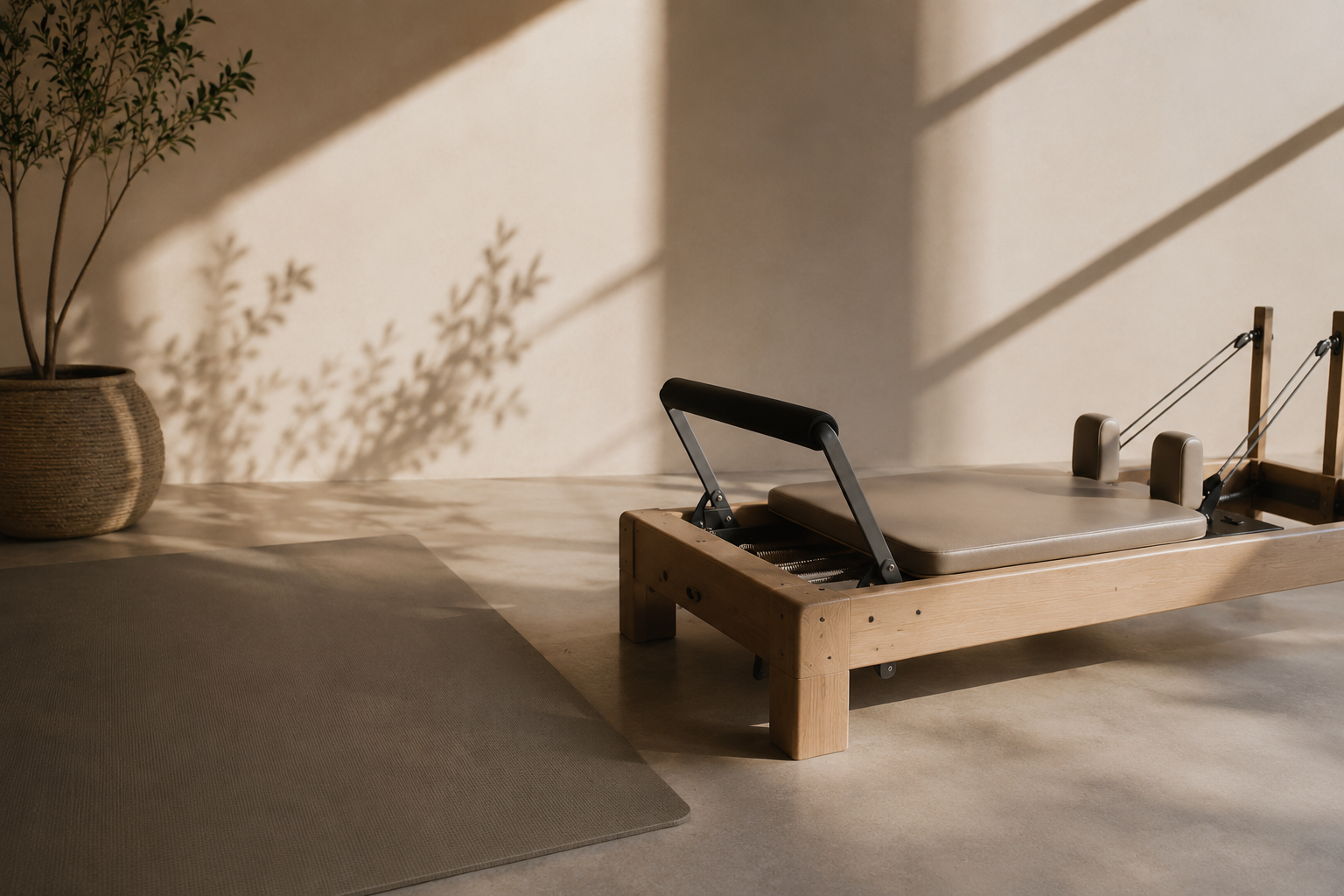
A Pilates reformer and mat side by side. Two different ways to train, same intentional work. Culture Pilates in Dade City, FL offers both.
Spoiler: you don't have to pick a side.
If you've ever stood at the front desk of a Pilates studio and asked "okay but which one should I do" then first of all, same. It's a completely normal question. And second, you're about to feel a lot better about it.
We get this one constantly. Mat or reformer? Which is harder? Which one is for beginners? Is the reformer intimidating? Is mat just stretching? And look, we love the curiosity. But we're going to say something that might surprise you.
This isn't pickleball versus tennis. We're not picking a side. We love both, we teach both, and honestly? You probably need both.
Let's break it down.
What is mat Pilates, really?
Mat Pilates is you, the floor, and your own bodyweight working against you. That's it. No springs, no straps, no machine to lean on. Just you doing the work.
Here's what people get wrong about mat: they assume it's the easy version. The beginner track. The thing you do before you're ready for the reformer. That is not how this works.
When there's no equipment to assist you, there's also nothing to hide behind. Your stabilizing muscles have to show up completely on their own. A 2021 study published in the Journal of Bodywork and Movement Therapies found that mat-based Pilates produced significant improvements in core muscle endurance and postural alignment, even in trained participants. Not beginners. Trained participants.
Mat is hard. It just doesn't look hard from the outside, which is exactly what makes it so deceiving.
What is reformer Pilates, really?
The reformer is a carriage-based machine with a spring resistance system. You push, pull, and move through exercises using the springs as either resistance or assistance depending on what the exercise calls for.
And here's where people get it backwards. A lot of people assume the machine makes it easier. Like it's doing the work for you. In reality, the reformer expands your range of motion, adds load, and introduces instability in ways that mat just can't. Some of the most advanced Pilates work in the world is done on a reformer.
The springs can be set to assist a movement for someone who's newer, or cranked up to challenge someone who's been doing this for years. That's the beauty of it. The machine doesn't define the difficulty. The workout does.
So which one is harder?
Neither. That's the actual answer.
I'll be the first to admit I came into Pilates through the reformer. My original reason wasn't even fitness in the traditional sense. I wanted to get more flexible for golf. The reformer made sense to me. It felt structured, it had variety, and I genuinely fell in love with it.
Then I got a workout subscription that included mat classes and started doing them on the days I wasn't on the reformer. I figured it would be my easier days. Active recovery, basically. Low key movement from my living room.
I was wrong.
Beginner mat classes were harder for me than anything I'd done on the reformer, and the reason was embarrassingly obvious once I figured it out. My core is my biggest weakness. And mat Pilates does not let that slide. There's no spring tension to lean on, no carriage to stabilize you. It's just your body, the floor, and every muscle you've been neglecting.
That's the thing about these two formats. They challenge your body differently. Mat asks your muscles to stabilize and work without any external support. Reformer asks your body to control load and resistance through a full range of motion. Both will humble you. Both will make you stronger. Both are legitimate, intelligent forms of movement.
We hear people say all the time "I only do mat, I'm not ready for reformer" or "I only do reformer, mat seems too basic." And every single time we think the same thing. You're leaving half the work on the table.
A consistent Pilates practice that includes both formats is more complete than sticking to one. The research on Pilates-based training consistently points to the importance of progressive variety in load and stability demands for long-term strength and injury prevention outcomes.
Which one should you start with?
Whichever one sounds interesting to you. Genuinely. That's the real answer.
If the reformer looks cool and you're curious, come try it. If mat sounds more approachable and you want to start there, perfect. There is no wrong door. At Culture Pilates, both classes are beginner-friendly and both are taught in a way that meets you exactly where you are.
The only mistake would be waiting until you feel "ready" for one or the other. You're ready now.
What we offer at Culture Pilates
We have mat, reformer, and heated mat all on the schedule. Small group sizes, real instruction, and a studio that actually feels good to be in
We’re located in Dade City and serve clients from Wesley Chapel, Zephyrhills, Land O’ Lakes, Brooksville, and Spring Hill.